




How are self-service machines reshaping the time boundaries of public services?
Release Time : 2025-12-15
In the wave of digital transformation, public services are undergoing a profound shift from "window-dependent" to "anytime-accessible." Traditional government service halls, social security centers, and bank branches are limited to 8-hour weekday operations, often causing inconvenience for the public due to time conflicts. However, intelligent terminals, represented by 27-inch multi-functional self-service machines, are breaking this time constraint with their 24/7 operation capabilities and highly integrated functional modules, extending public services to a new dimension of "7x24 hours without closing," truly realizing "less legwork for the public, and services that never close."
1. 7x24-hour online: Services are no longer interrupted by "off-hours"
A 27-inch self-service machine deployed in a community service center, subway station, or 24-hour convenience station can provide dozens of high-frequency services year-round, including identity authentication, social security inquiry, medical insurance payment, document printing, and tax declaration. Whether it's needing to print a certificate after working late at night or urgently needing to handle business on holidays, users only need to swipe their ID card, enter their password, and complete facial recognition to complete the operation within minutes. This "always available" feature completely eliminates the pain point of "no time to handle matters during work hours, nowhere to handle matters after get off work," liberating public services from "institutional schedules" and returning to the service essence of "people-centeredness."
2. High-performance hardware support: Large-screen interaction enhances the nighttime user experience
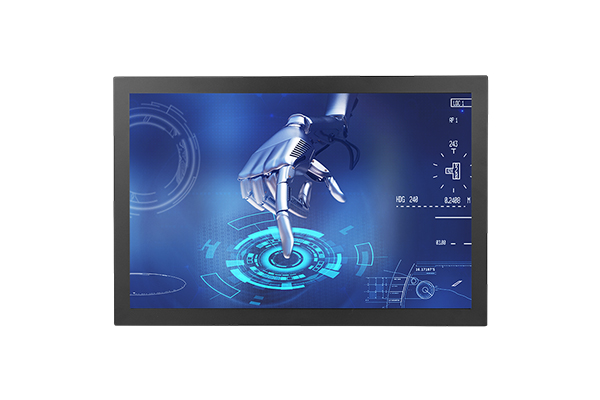
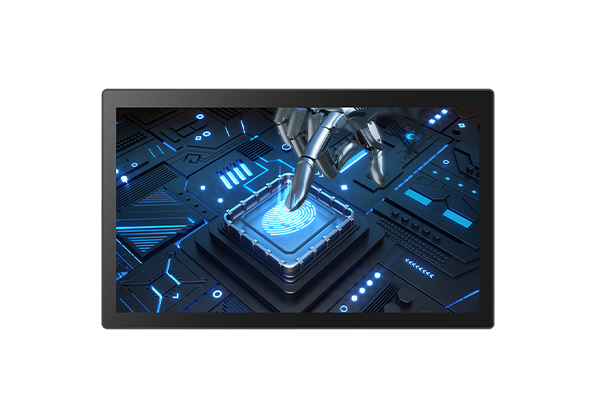
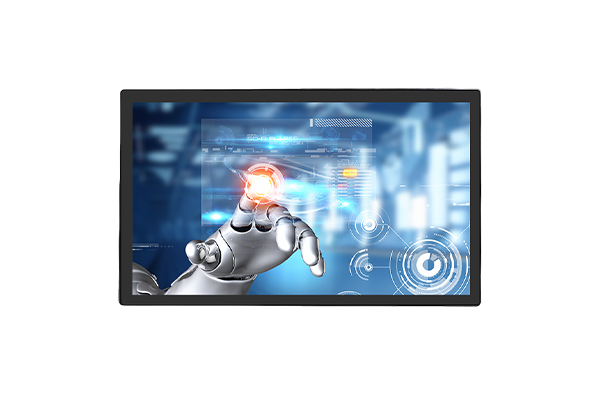
The self-service machine uses a 27-inch high-definition touchscreen display, paired with a KeeTouch capacitive sensor, supporting 10-point touch. It is responsive and operates smoothly, providing clear visual feedback even in low-light nighttime environments. The 4mm tempered glass cover is scratch-resistant and wear-resistant, while the aluminum alloy frame and cold-rolled steel back shell ensure the entire machine is robust and durable, suitable for all-weather outdoor or semi-outdoor deployment. Built-in dual-lens cameras support liveness detection, effectively preventing photo or video impersonation; the metal keypad is anti-peeping and anti-tamper, ensuring financial-grade security; combined with card readers, scanners, and other modules, it constructs a secure, efficient, and intuitive human-computer interaction loop, making nighttime operation equally safe and convenient.
3. Customized Design: Integrating into Diverse Scenarios, Extending Service Reach
The device supports customization of the casing, screen bezel, and color, flexibly adapting to different environments such as government service halls, hospitals, campuses, and commercial complexes. For example, a light-colored, warm version can be used in communities, a high-contrast warning color in subway stations, and a silent mode in hospitals—this "scenario-friendly" design not only increases user acceptance but also encourages people to use it proactively during off-peak hours, further dispersing service pressure and optimizing the allocation of public resources.
4. Data Linkage and Remote Operation and Maintenance: Ensuring Reliability of Nighttime Services
The backend system connects in real-time with the government cloud platform, ensuring business data synchronization within seconds; simultaneously, the device has remote monitoring and fault self-diagnosis functions. If paper jams, network outages, or software malfunctions occur at night, the operations and maintenance platform can automatically issue alerts and push solutions. Some issues can even be remotely restarted and repaired, minimizing service interruptions caused by machine malfunctions. This "intelligent monitoring" mechanism is the technological cornerstone of sustainable 24/7 service operation.
Self-service machines are not merely hardware terminals; they are "barrier breakers" to the time boundaries of public services. Operating tirelessly, they extend government services from the "9-to-5" workday to "every moment," truly integrating convenience into citizens' lives. When a mother prints her child's school enrollment certificate in the early morning, when an elderly person completes medical insurance certification on the weekend, when an office worker pays traffic fines late at night—these once unimaginable scenarios are now commonplace thanks to self-service machines. This is not only an improvement in efficiency but also a manifestation of the warmth and inclusiveness of public services.
1. 7x24-hour online: Services are no longer interrupted by "off-hours"
A 27-inch self-service machine deployed in a community service center, subway station, or 24-hour convenience station can provide dozens of high-frequency services year-round, including identity authentication, social security inquiry, medical insurance payment, document printing, and tax declaration. Whether it's needing to print a certificate after working late at night or urgently needing to handle business on holidays, users only need to swipe their ID card, enter their password, and complete facial recognition to complete the operation within minutes. This "always available" feature completely eliminates the pain point of "no time to handle matters during work hours, nowhere to handle matters after get off work," liberating public services from "institutional schedules" and returning to the service essence of "people-centeredness."
2. High-performance hardware support: Large-screen interaction enhances the nighttime user experience
The self-service machine uses a 27-inch high-definition touchscreen display, paired with a KeeTouch capacitive sensor, supporting 10-point touch. It is responsive and operates smoothly, providing clear visual feedback even in low-light nighttime environments. The 4mm tempered glass cover is scratch-resistant and wear-resistant, while the aluminum alloy frame and cold-rolled steel back shell ensure the entire machine is robust and durable, suitable for all-weather outdoor or semi-outdoor deployment. Built-in dual-lens cameras support liveness detection, effectively preventing photo or video impersonation; the metal keypad is anti-peeping and anti-tamper, ensuring financial-grade security; combined with card readers, scanners, and other modules, it constructs a secure, efficient, and intuitive human-computer interaction loop, making nighttime operation equally safe and convenient.
3. Customized Design: Integrating into Diverse Scenarios, Extending Service Reach
The device supports customization of the casing, screen bezel, and color, flexibly adapting to different environments such as government service halls, hospitals, campuses, and commercial complexes. For example, a light-colored, warm version can be used in communities, a high-contrast warning color in subway stations, and a silent mode in hospitals—this "scenario-friendly" design not only increases user acceptance but also encourages people to use it proactively during off-peak hours, further dispersing service pressure and optimizing the allocation of public resources.
4. Data Linkage and Remote Operation and Maintenance: Ensuring Reliability of Nighttime Services
The backend system connects in real-time with the government cloud platform, ensuring business data synchronization within seconds; simultaneously, the device has remote monitoring and fault self-diagnosis functions. If paper jams, network outages, or software malfunctions occur at night, the operations and maintenance platform can automatically issue alerts and push solutions. Some issues can even be remotely restarted and repaired, minimizing service interruptions caused by machine malfunctions. This "intelligent monitoring" mechanism is the technological cornerstone of sustainable 24/7 service operation.
Self-service machines are not merely hardware terminals; they are "barrier breakers" to the time boundaries of public services. Operating tirelessly, they extend government services from the "9-to-5" workday to "every moment," truly integrating convenience into citizens' lives. When a mother prints her child's school enrollment certificate in the early morning, when an elderly person completes medical insurance certification on the weekend, when an office worker pays traffic fines late at night—these once unimaginable scenarios are now commonplace thanks to self-service machines. This is not only an improvement in efficiency but also a manifestation of the warmth and inclusiveness of public services.