

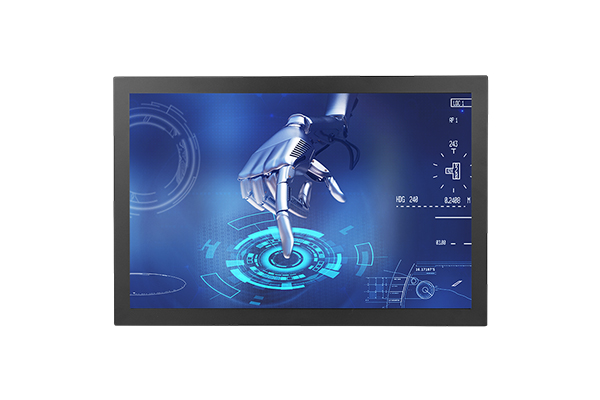
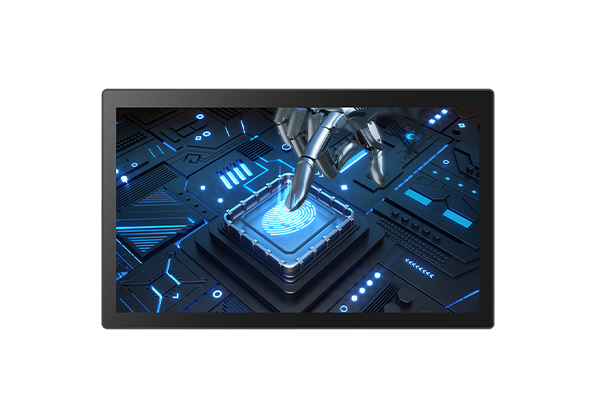
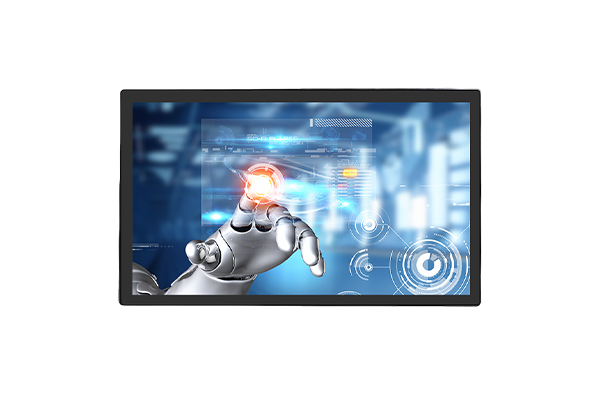


How does the open frame touch monitor achieve near-native display quality with its Keetouch CA touch panel?
Release Time : 2025-12-08
In industrial control, smart retail, medical terminals, and high-end human-machine interaction systems, the integration of display quality and touch experience is crucial. Traditional add-on or infrared touch solutions often suffer from blurred images, severe glare, and color distortion due to the added optical layers, making them unsuitable for applications with stringent visual precision requirements. The open frame touch monitor, equipped with the Keetouch CA touch panel, redefines the standard for industrial-grade touch displays with its "lossless image quality" technology—not only achieving near-native non-touchscreen image quality but also catering to future upgrades and high-performance display needs.
1. Keetouch CA: Zero-Interference Integration of Touch and Display
The core of Keetouch CA technology lies in its "integrated optical stacking" design. Unlike traditional surface capacitive or infrared touch systems that require additional glass or bezel sensors, CA technology integrates the touch sensing layer directly into the internal structure of the LCD panel, significantly reducing air gaps and unnecessary optical interfaces. This "embedded" architecture effectively avoids the refraction, scattering, and reflection of light between multiple media, thus significantly improving light transmittance, resulting in more saturated colors, deeper blacks, and a mirror-like overall image. What the user sees is the panel's true color, truly achieving a native-level visual experience where "touch is present, yet it's invisible."
2. High-Specification Display Performance: Triple Guarantee of Brightness, Contrast Ratio, and Viewing Angle
Combined with Keetouch CA touch technology, open-frame monitors generally use industrial-grade high-quality LCD panels with a brightness exceeding 1000 nits, ensuring clear visibility even in bright light; a dynamic contrast ratio exceeding 5000:1 ensures rich image detail and distinct nuances; and a 178° ultra-wide viewing angle provides consistent color and brightness performance from the front, side, or even overhead. This synergistic optimization of the three parameters gives these monitors an irreplaceable advantage in image-sensitive fields such as medical imaging diagnostics and precision equipment monitoring.
3. Future-Oriented Modular Upgrades: Flexible Evolution Without External Modifications
A major highlight of the open-frame design is its forward-looking compatibility. Since the touch functionality is deeply integrated into the panel, when a new generation of display modules with higher resolution, higher refresh rates, or lower power consumption is introduced, the entire device only needs to replace the core display module, without adjusting the casing, bracket, interfaces, or system structure. This "plug-and-play" upgrade path greatly extends the lifecycle of terminal devices and reduces long-term operating costs for customers, making it particularly suitable for industry scenarios with long product iteration cycles and large-scale deployments, such as rail transit, energy and power, or smart city infrastructure.
4. Open Frame: Engineering Wisdom Born for Integration
The "open frame" itself means no front frame, no decorative casing, retaining only the display module and necessary support structure, facilitating the embedding of various customized terminal devices. Combined with the Keetouch CA's slim and lightweight characteristics, the overall thickness can be controlled within an extremely narrow range, perfectly adapting to space-constrained self-service terminals, industrial control cabinets, or vehicle-mounted systems. At the same time, the frameless design reduces dust accumulation dead spots, improving applicability in cleanrooms or food processing environments. The open frame touch monitor, through its Keetouch CA touch panel, successfully resolves the long-standing contradiction between "touch functionality" and "ultimate image quality." It eliminates interference through optical integration, solidifies the visual foundation with a high-specification panel, and embraces future upgrades with a modular architecture, truly achieving a new paradigm for industrial displays that is "clear to see, accurate to touch, and durable."
1. Keetouch CA: Zero-Interference Integration of Touch and Display
The core of Keetouch CA technology lies in its "integrated optical stacking" design. Unlike traditional surface capacitive or infrared touch systems that require additional glass or bezel sensors, CA technology integrates the touch sensing layer directly into the internal structure of the LCD panel, significantly reducing air gaps and unnecessary optical interfaces. This "embedded" architecture effectively avoids the refraction, scattering, and reflection of light between multiple media, thus significantly improving light transmittance, resulting in more saturated colors, deeper blacks, and a mirror-like overall image. What the user sees is the panel's true color, truly achieving a native-level visual experience where "touch is present, yet it's invisible."
2. High-Specification Display Performance: Triple Guarantee of Brightness, Contrast Ratio, and Viewing Angle
Combined with Keetouch CA touch technology, open-frame monitors generally use industrial-grade high-quality LCD panels with a brightness exceeding 1000 nits, ensuring clear visibility even in bright light; a dynamic contrast ratio exceeding 5000:1 ensures rich image detail and distinct nuances; and a 178° ultra-wide viewing angle provides consistent color and brightness performance from the front, side, or even overhead. This synergistic optimization of the three parameters gives these monitors an irreplaceable advantage in image-sensitive fields such as medical imaging diagnostics and precision equipment monitoring.
3. Future-Oriented Modular Upgrades: Flexible Evolution Without External Modifications
A major highlight of the open-frame design is its forward-looking compatibility. Since the touch functionality is deeply integrated into the panel, when a new generation of display modules with higher resolution, higher refresh rates, or lower power consumption is introduced, the entire device only needs to replace the core display module, without adjusting the casing, bracket, interfaces, or system structure. This "plug-and-play" upgrade path greatly extends the lifecycle of terminal devices and reduces long-term operating costs for customers, making it particularly suitable for industry scenarios with long product iteration cycles and large-scale deployments, such as rail transit, energy and power, or smart city infrastructure.
4. Open Frame: Engineering Wisdom Born for Integration
The "open frame" itself means no front frame, no decorative casing, retaining only the display module and necessary support structure, facilitating the embedding of various customized terminal devices. Combined with the Keetouch CA's slim and lightweight characteristics, the overall thickness can be controlled within an extremely narrow range, perfectly adapting to space-constrained self-service terminals, industrial control cabinets, or vehicle-mounted systems. At the same time, the frameless design reduces dust accumulation dead spots, improving applicability in cleanrooms or food processing environments. The open frame touch monitor, through its Keetouch CA touch panel, successfully resolves the long-standing contradiction between "touch functionality" and "ultimate image quality." It eliminates interference through optical integration, solidifies the visual foundation with a high-specification panel, and embraces future upgrades with a modular architecture, truly achieving a new paradigm for industrial displays that is "clear to see, accurate to touch, and durable."